
 Cart is empty
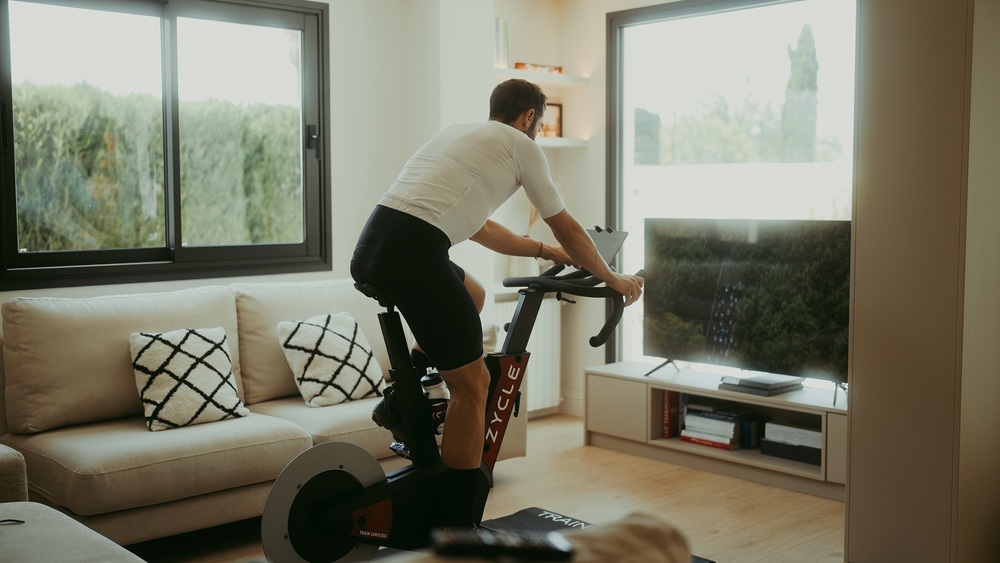
Lower back pain in cyclists can appear for many reasons: sustained posture, lack of mobility, excessive load, poor core stability, or an inadequate bike setup. In indoor cycling, where you repeat the same position for a long time, those details become more noticeable.
Not all lower back pain has the same origin, and if the discomfort is intense or persistent, it’s advisable to consult a healthcare professional. Even so, understanding the most common factors helps you review your position on the bike, your load progression, and how you prepare each session.
Why lower back pain appears in cycling
The lumbar area works to stabilize the body while you pedal. If the position forces you to close the hip angle too much, if the handlebar is too far away, or if the pelvis loses stability, the lower back may take on more tension than necessary. That tension builds up especially during long sessions.
A first check is to confirm the correct posture on an indoor bike. Saddle height, setback, reach to the handlebar, and how you support yourself on the handlebar influence how the load is distributed. Small changes can greatly alter how your lower back feels.
Saddle and handlebar setup
A saddle that’s too high can cause the pelvis to rock side to side. One that’s too low can close the hip and load the lower back. The height should allow you to pedal with control, without overextending the leg at the bottom of the pedal stroke or feeling that the knee stays too bent during each cycle.
Reach to the handlebar also matters. If it’s too far away, you tend to lengthen your back and hold tension in the shoulders and lower back. If it’s too close, you can hunch your posture and lose space to breathe. On a smartbike like the ZBike Infinity, the adjustments help you fine-tune the position more precisely.
The goal isn’t to find a rigid posture, but a position you can maintain without locking up your back. If you constantly have to push with your arms or you notice the pelvis moving too much, the lower back may end up compensating. A stable position should let you breathe well, relax your shoulders, and keep a smooth pedal stroke.
Core, mobility, and stability on the bike
The back doesn’t work alone. Trunk stability depends on the abdominals, glutes, hips, and deep musculature. If that base fails, the lower back may compensate. That’s why some cyclists feel discomfort even if the bike is reasonably well fitted. The issue isn’t always in a single place, nor is it solved by changing just one measurement.
Mobility also plays a role. Stiff hips or very tight hamstrings can change the position of the pelvis. Indoors, since there are no terrain changes that force you to vary posture, that limitation repeats for many minutes. Alternating positions and standing up occasionally can ease the load.
Before long sessions, a few simple hip mobility and core activation movements can help you settle into the posture better. There’s no need to turn it into a long routine. It’s enough to prepare the area that will stabilize you while pedaling, especially if you train after many hours sitting.
Warning signs during an indoor session
Mild discomfort that appears at the end of a long session does not mean the same as sharp pain, radiating pain, or pain that worsens with each workout. It’s worth noting when it appears, how long it lasts, and whether it changes when you adjust your posture. That information helps you decide whether an adjustment is enough or whether you need a professional assessment.
Other symptoms, such as numbness and discomfort indoors, may be related to support, pressure, or sustained posture. You shouldn’t ignore them if they recur. The goal isn’t to tolerate more pain, but to understand what’s causing it.
How to prevent discomfort through adjustments
Prevention starts with not changing everything at once. If you modify saddle height, setback, and handlebar settings on the same day, it will be hard to know what worked. It’s better to make small adjustments, test over several sessions, and note how you feel. The ideal position should let you pedal powerfully without creating unnecessary tension.
A biomechanical fit helps you understand that there isn’t a single perfect position for everyone. It depends on your mobility, goals, injury history, and training type. An aggressive position may work for specific efforts, but not always for long sessions. Indoors, sustained comfort is often more useful than copying an extreme position.
Training load and lower back recovery
Load matters too. Increasing hours too quickly, doing too many intervals, or repeating intense sessions without rest can cause discomfort even if the fit is correct. The lower back contributes to stabilization and needs time to adapt. Gradual progression is key, especially if you’re coming from low training volume.
Before a long session, an easy warm-up and some mobility movements can prepare your posture better. Afterward, reducing intensity for a few minutes helps you come out of the pedaling position without stopping abruptly. They aren’t magic solutions, but they reduce accumulated stiffness and make recovery more comfortable.
If you’re unsure whether to adjust the bike or adjust the plan, review both. A poor week of rest can make a familiar posture feel worse. And a poorly adjusted posture can turn a reasonable load into recurring discomfort. Biomechanical fitting on indoor bikes should be understood alongside training load, not as an isolated element.
The final idea is to view lower back pain in cycling as a signal related to fit, load, and postural control. If it appears occasionally, it can help you correct details. If it repeats or limits training, it deserves professional attention. Indoor training should help you pedal better, not normalize constant discomfort.
A simple review after each change helps a lot: note what you adjusted, how you felt, and at what minute the discomfort appeared. With two or three sessions you can spot patterns. That record prevents random adjustments and allows you to build a more comfortable, sustainable position.