
 Cart is empty
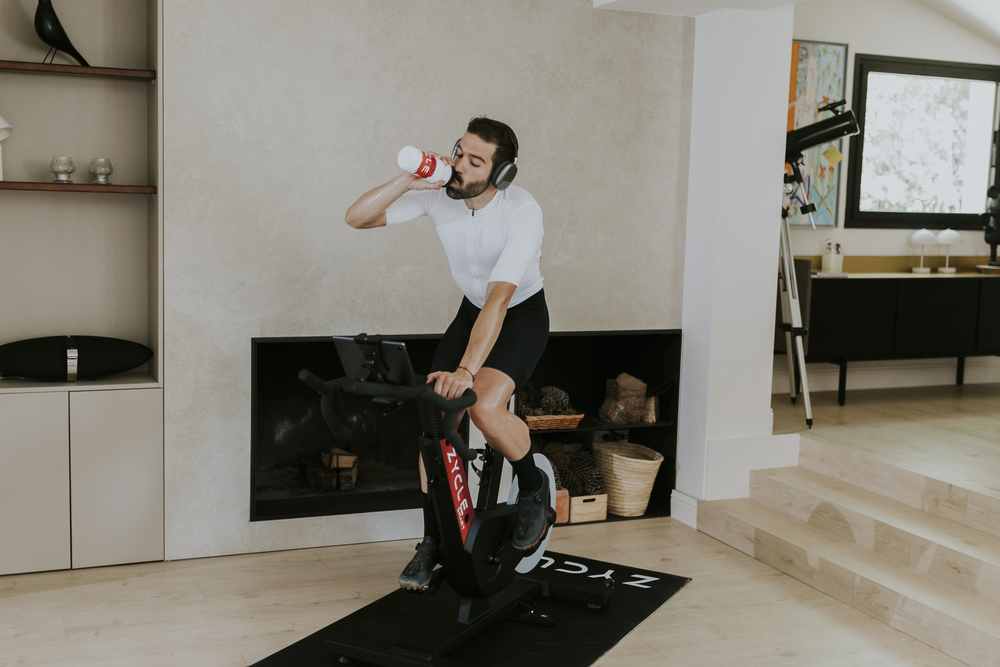
Hydration in cycling is not about drinking as much as possible before getting on the bike. Its goal is to arrive at the session in a normal state, limit excessive fluid loss during the effort, and recover afterward without forcing intake. On hot days, duration, intensity, and your sweat rate change what you need.
Indoors, the airflow generated by riding on the road disappears. Even if the room temperature does not seem extreme, the body can accumulate heat and sweat heavily. That is why a useful strategy combines drinking, ventilation, and personal observation, instead of applying the same amount of water to every session.
Why heat changes your response on the bike
When you pedal, you produce heat, and the body increases blood flow to the skin and sweating to dissipate it. If the environment is warm, humid, or poorly ventilated, that thermal balance becomes more demanding. Your heart rate may rise for the same power output, and maintaining your usual pace starts to feel harder, even if you began with good sensations.
Sweat cools when it evaporates. If it falls to the floor without evaporating, you have lost fluid but gained less cooling. The tips for indoor cycling in summer help prepare the space and adjust expectations. In the heat, reducing intensity can be the right decision, not a sign of poor fitness.
How to start hydrated without drinking too much
Start the session normally: drink with meals and respond to thirst throughout the day. Very dark and scarce urine may suggest that you are short on fluids, while completely clear urine all the time may indicate unnecessarily high intake. Color is only a clue, since foods, supplements, and medications can also change it.
Avoid making up for it at the last minute with several glasses in a row. The body does not store extra water without limit, and starting with a full stomach can be uncomfortable. Prepare your bottle, keep a towel nearby, and point a fan toward your torso. This guide on ventilation and temperature during training explains why moving air is part of the heat-management strategy.
What to drink during a short or long session
In an easy and relatively short workout, done in a cool room, water is usually enough. Drink according to thirst and experience, with sips that do not interrupt your pedaling. If the session runs longer, intensity increases, you sweat a lot, or you train in the heat, a drink that provides electrolytes and, when appropriate, carbohydrates may be useful.
There is no universal number of milliliters per hour that works for everyone. Body size, acclimatization, sweat rate, and the environment create major differences. The goal is also not to finish at exactly the same weight at any cost. Drinking beyond losses can dilute blood sodium and cause exercise-associated hyponatremia, a risk that makes it necessary to avoid overhydration.
A practical guideline is to place the bottle where you can see it and drink small amounts when thirst prompts you, while checking how your stomach responds. In long sessions, it is best to test the drink during training, not try it for the first time in a ride or competition. The plan should allow you to pedal comfortably and not become another source of stress.
When salts and sodium make sense
Sweat contains water and electrolytes, especially sodium, but the concentration varies greatly from person to person. Salts become more relevant in prolonged efforts, hot environments, high sweat rates, or when frequent salt marks appear on clothing. Even so, more sodium is not always better, and a capsule does not correct insufficient fluid intake.
Your usual diet already provides sodium and can cover part of the replacement. A sports drink allows you to combine fluid, sodium, and carbohydrates, but it should be chosen according to duration and tolerance. The guide on how to manage sweat in indoor cycling completes the practical side to also protect the bike and the floor.
How to estimate how much you sweat in one hour
You can get a reference by weighing yourself before and after a session, with dry clothing and under similar conditions. Also note how much you drank and whether you urinated. As a working approximation, each kilogram lost equals about one liter. The estimated sweat rate adds the weight lost and the fluid consumed, subtracts urine, and divides the result by the duration in hours.
For example, if you lose 0.6 kg, drink 0.5 liters, and do not urinate during one hour, the estimate is 1.1 liters per hour. You do not need to replace that amount exactly while you pedal. Use it to compare a cool session with a hot one and adjust your bottle. Repeat the measurement, because a single day does not describe all your conditions.
A simple routine for hot sessions
Before starting, ventilate the room, prepare a familiar drink, and reduce the goal if the heat is intense. A trainer like the Smart ZPro for controlled indoor sessions allows you to train at home, but resistance control does not replace airflow. During the effort, observe thirst, heart rate, perceived exertion, and any unusual changes.
Afterward, keep drinking gradually and support recovery with a normal meal that provides fluid and salt. If confusion, fainting, severe headache, persistent vomiting, or loss of coordination appear, stop the session and seek medical care. Do not try to resolve serious symptoms by drinking large amounts of water without knowing the cause.
Good hydration is not recognized by emptying more bottles, but by adapting the strategy to your sweat, the environment, and the workout. Measure when you need to, test drinks in regular sessions, and combine fluids with ventilation and a reasonable load. This way you can face the heat with a repeatable plan without turning a general recommendation into a rigid rule.