
 Cart is empty
Exercising on your period doesn’t have to be a problem, but it also shouldn’t feel like an obligation to perform the same way every day. The menstrual cycle can influence energy, perceived effort, rest, and tolerance to intensity, so it makes sense to adjust training when your body asks for it.
The key is not to stop automatically or push through out of pride. It is about learning to read signals, choosing the right session, and understanding what type of work fits each moment. In indoor cycling, that adjustment is easier because you can control intensity, duration, cadence, and resistance very precisely, even if you change the plan as you start.
Training during menstruation without forcing it
During the first days of bleeding, you may experience pain, heaviness, fatigue, or lower motivation. If the symptoms are mild, a gentle session can help you move without adding stress. If the pain is intense, clearly different from other cycles, or limits your daily life, the sensible thing to do is consult a healthcare professional before pushing on.
In a more sensitive phase, the goal may be to maintain the habit at low intensity. Pedaling at a comfortable cadence, with low resistance and controlled breathing, may work better than trying to complete a demanding session. This logic connects with active recovery and how to do it correctly, because gentle movement can also be part of progress.
What changes in the follicular phase
After menstruation, many people notice more energy and a better mindset for training. It does not happen the same way in every cycle, but the follicular phase is often a good time to introduce progressive intensity, short intervals, or sessions where you want to work with a little more spark, coordination, and confidence on the bike.
Here you can take the opportunity to try more demanding blocks without losing control. A simple example would be to warm up well, do several moderate intervals, and leave enough margin to finish feeling good. The idea is not to turn each cycle into a rigid template, but to use the phase as one more cue to make informed decisions and better adjust progression.
Ovulation, sensations, and load control
Around ovulation, some athletes feel strong and stable, while others notice discomfort, bloating, or changes in coordination. That is why it is best to avoid universal rules. Your training diary can tell you more than a general theory if you record symptoms, rest, and performance over several weeks in enough detail.
If you feel good, you can include tempo work, high cadence, or controlled intervals. If you notice more discomfort, lower the demand slightly and prioritize technique. Cross-checking sensations with heart rate in indoor cycling to control intensity helps decide whether to maintain the block, ease it, or leave it for another day.
How to adapt the luteal phase
In the days before your period, fatigue, increased hunger, poorer sleep, or a feeling of heaviness may appear. That does not mean you should stop training, but you may need to change the type of stimulus. Instead of chasing maximum efforts, it may make more sense to maintain consistency and avoid accumulating too much load before the next block.
A useful week can combine easy rides, steady aerobic work, and a short activation session if it feels good. If you are irritable, tired, or sleeping worse, reviewing the importance of rest in cycling helps you understand that adapting is not going backward, but protecting the next session and arriving with more room to work.
Signs you should lower the intensity
There are days when the planned workout does not match what you feel when you get on the bike. That reading is part of training, especially if your cycle has a strong influence on your sensations. You do not need to wait until you are exhausted to adjust the load or to swap an intense block for gentler, more technical, and more controlled work with better breathing.
It is advisable to lower the intensity if you experience severe pain, dizziness, nausea, abnormal bleeding, disproportionate fatigue, or a much higher sense of effort than usual. Also if you have been sleeping badly for several nights. In those cases, an easy session or rest may give you more than forcing intervals and ending up worse the next day, with more accumulated tension.
How to organize your indoor sessions
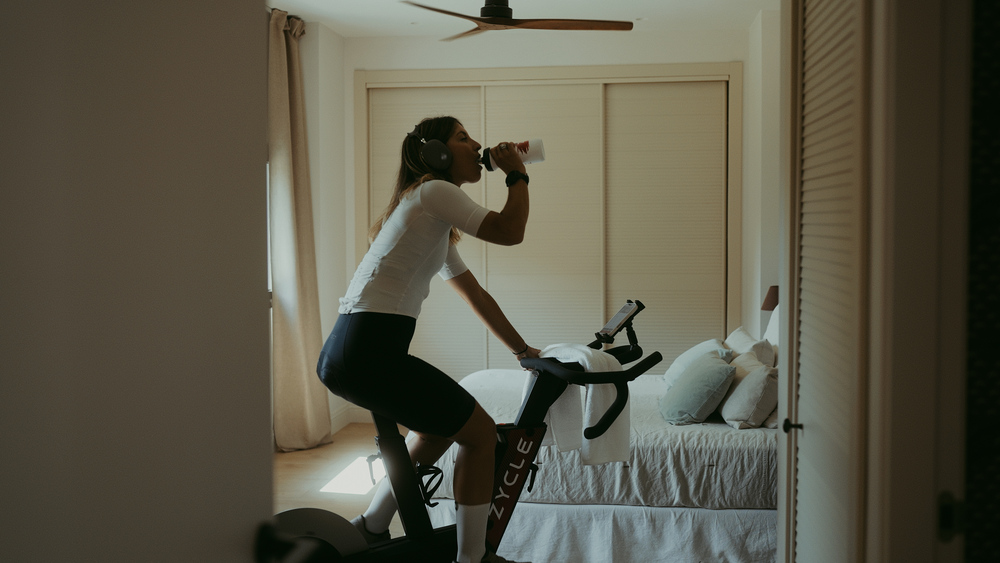
Indoor training allows you to adapt your workout without depending on terrain or weather. You can turn a hard session into a controlled ride, shorten the duration, or maintain cadence while reducing resistance. That flexibility is useful when your cycle does not always follow the same pattern and you need to make decisions during the session without losing consistency or a sense of control.
If you also record how you feel, you will be able to detect whether on certain days you respond better to intensity, technique, or recovery, without depending on an outdoor route. That control turns indoor training into a flexible tool, especially when you need to adjust load, duration, and cadence without giving up the habit or disrupting your training week.
Listening to your cycle without losing consistency
Training with your cycle is not about dividing the month into fixed rules. It is about observing how you respond and adjusting with good judgment. One month you may tolerate an intense session during your period well, and another month you may need to move gently. Both responses can be normal if they are aligned with your sensations, your recovery, and your daily context.
To avoid improvising every day, you can note the cycle phase, sleep, energy, pain, type of session, and perceived effort. After several weeks, patterns will appear. A smart trainer like the ZPro for adjustable indoor sessions at home can help you repeat comparable sessions and better understand how your body responds in each phase.
That information also helps protect motivation. If one day you need to slow down, it is not a failure. It is a training decision. Just as you adapt gearing, cadence, or duration, you can adapt to the hormonal and energy load of the moment. Your relationship with exercise becomes more sustainable when you train with data, sensations, and respect for the body, without turning every session into a rigid, non-negotiable obligation that is always the same.