

 Cart is empty
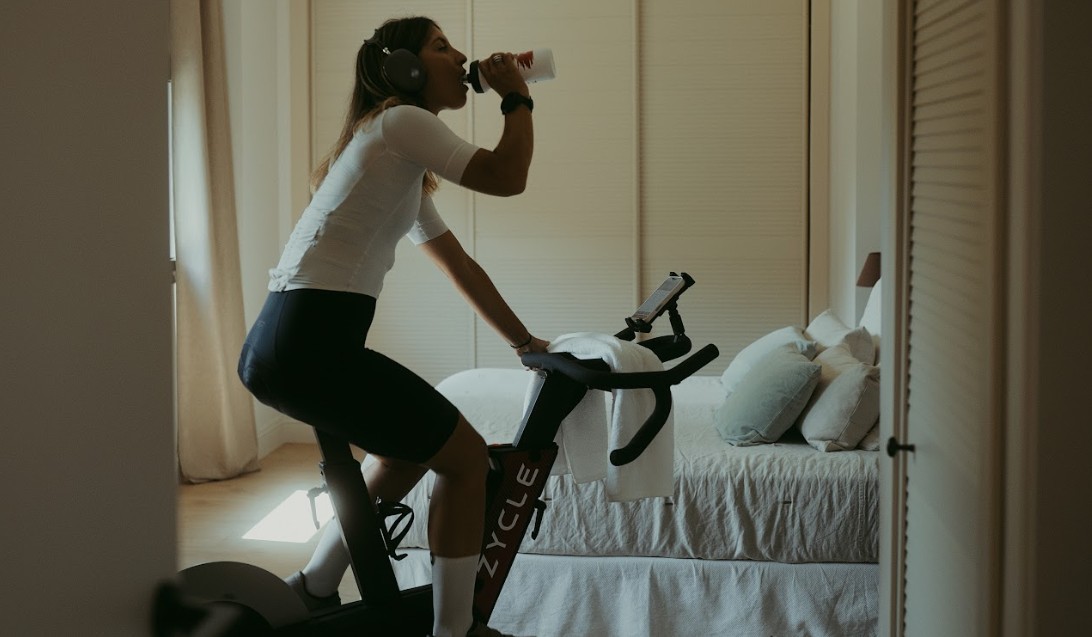
A night of interrupted sleep can change how you feel about getting on the bike. You may have planned an intense session, but today you feel like pedaling at an easy pace. When planning exercise during menopause, being able to make that adjustment helps maintain a routine that remains manageable even when symptoms vary.
Indoor cycling has a practical advantage: you choose how long to train, adjust the resistance, and can finish whenever you need to. For some women, it will be a way to get moving again. For others, it will be part of their usual training. In both cases, it is advisable to complement cycling with strength training and suitable activities to care for bone health.
An effort you can adjust as you go
Cycling allows you to work on aerobic capacity with your weight supported by the bike, without the impacts that occur when running. If brisk walking or running feels uncomfortable, it may be an option you tolerate better. Test it with a simple session: resistance, posture, and the time spent sitting also affect how you feel when you finish.
Your breathing and perception of effort during training give you a reference point for adjusting your pace. At moderate intensity, you should be able to talk, although singing would be difficult. On a tired day, this check allows you to ease off without chasing a wattage figure. And if you have been training for some time and feel well, menopause does not mean you have to stop doing intense sessions.
How to start again without exhausting yourself in the first week
Before choosing a routine, consider how much you are moving now. If you have been inactive for a long time, have a medical condition, or are unsure about the level of effort you can manage, seek medical guidance. With that starting point clear, look for short sessions you can repeat and observe how you respond, both during and after cycling.
One way to start would be to set aside fifteen minutes: begin gently, maintain a comfortable stretch, and slow down again at the end. Adjust that time to your ability. If you finish so tired that the next session becomes an obligation, reduce the duration or resistance. Once you complete several sessions comfortably, you will have more information to decide what you can add.
As a general guideline for adults, at least 150 minutes of moderate activity per week and strength training on two days are recommended. You can gradually work toward that amount by combining activities. A brisk walk also counts. Splitting your activity between cycling and walks may fit your week better than trying to complete all the minutes in the saddle.
Set aside time for muscles and bones
Strength training deserves its own place. Exercises with adapted resistance allow you to work the main muscle groups beyond the pedaling motion. The basics of strength training for cyclists explain how both activities complement each other. If you are starting from scratch, learning the technique with guidance is a good first step. A routine that works for someone experienced may be too demanding at first.
Bones also need the stimulus of activities in which you support your own weight, such as walking, and impact when appropriate. On the bike, the seat supports much of your body, so pedaling provides little of that stimulus. It is advisable to combine it with other activities adapted to you. If you have osteoporosis, a history of fractures, or balance difficulties, ask which movements and loads are suitable before adding jumps or demanding exercises.
When heat or poor sleep make the session difficult
Set up the fan before you start. A closed room can make an effort that you handle well on other days feel uncomfortable, and waiting until you are overheated to look for airflow interrupts the session. Check the ventilation of your indoor training space, keep water nearby, and choose clothing that helps release heat. You can also try a different time of day if you identify times when you feel more comfortable.
After sleeping poorly, a shorter or gentler session may be a better fit. Your recovery between sessions will guide you before you demand more again. If hot flashes or sleep problems persistently interfere with your day-to-day life, speak with a healthcare professional about how to treat them. Exercise can contribute to well-being, but you do not have to resign yourself to living with these discomforts.
The saddle matters too
Sometimes you have the energy to continue, but your posture becomes uncomfortable after a few minutes. The reach to the handlebars or the need to shift on the seat to reach the pedals can give you clues about the fit. It is worth reviewing if back or knee discomfort keeps recurring. Knowing when it starts will make it easier to explain if you need advice.
The position adjustments on our ZYCLE smart indoor bikes allow you to adapt your riding position depending on the model. It is best to try one change at a time and keep a reference of the initial position. If you move the seat and handlebars at the same time, it will be harder to know what has helped or to go back when something does not feel comfortable.
Pay attention to discomfort in the contact area. Chafing or genital pain may make it necessary to shorten the session, check the saddle, or alternate activities. If it persists, seek advice. There is no reason to assume it is an inevitable part of menopause or to keep adding minutes when sitting becomes increasingly uncomfortable.
Organize your week around what feels good for you
Look for a schedule you can repeat. You may find that cycling on some weekdays, doing strength training at other times, and walking during the weekend works for you. Adjust the durations to what you have been doing. If you experience chest pain, dizziness, or disproportionate shortness of breath, stop and seek medical attention. A new symptom deserves to be assessed on its own, without automatically attributing it to this stage.
You may notice the first everyday improvements when climbing stairs or when comfortably finishing a session that used to be difficult, even if your weight barely changes. There will also be days when you sleep poorly again and prefer to ease off. A routine that allows for these changes is more likely to support you during this stage than one that requires you to feel equally well every morning.