

 Cart is empty
If pain travels down your leg when you sit on the bike, continuing to pedal to see if it goes away may not be a good idea. The relationship between sciatica and cycling varies depending on the cause and your response to exertion. Some people tolerate gentle pedaling well, while others need to stop temporarily and choose another activity.
To decide, both what happens while you are in the saddle and what you notice afterwards matter. It is important to first recognise the symptoms that require attention and, if the discomfort is new or you do not yet have a diagnosis, seek a medical assessment. From there, you can find out whether cycling fits into your recovery and which changes are worth trying.
Back pain is not always sciatica
Sciatica is usually related to irritation of nerve roots in the lumbar region. It can cause pain that travels down the leg, tingling, loss of sensation or weakness. Localised discomfort in the back or buttock alone does not make it possible to identify it. Lower back pain in cyclists may have other explanations, which can be distinguished through the history of symptoms and an examination.
During a consultation, it is helpful to be able to explain where the discomfort begins and how far it travels. It may appear as soon as you sit down, when you increase resistance, or after you have been in the same position for a while. These details say more than describing everything as back pain. You do not need to identify on your own which structure is causing it in order to explain what is happening to you.
When to stop and seek medical attention
Go to the emergency department if you experience loss of sensation in the genital or anal area, new difficulty urinating, or loss of bladder or bowel control. Sciatic symptoms on both sides, or marked or progressive weakness or loss of sensation, especially in both legs, also require urgent attention. With these signs, changing the saddle or resting until the next day is not a sufficient response.
During training, stop if new weakness appears, tingling clearly increases, or pain travels further down the leg. Even if there are no emergency warning signs, pain that worsens, limits your activities, or does not improve should be assessed. Also explain any changes from what has already been evaluated, as they may alter the exercise plan.
How to assess whether you tolerate pedaling
Staying active is usually part of managing sciatica, with a workload you can tolerate. If you have already been assessed and cycling fits the advice you have received, a short, gentle session that is easy to stop can show how you respond. The watts or minutes you did before the episode are no longer the benchmark during these first attempts.
Your response afterwards matters just as much as how you feel on the bike. Imagine that ten minutes seem manageable, but afterwards it is harder to walk or your leg is clearly uncomfortable throughout the afternoon. The session is too demanding under those conditions, and it is worth discussing before repeating or extending it. Knowing whether this always happens after pedaling or also at other times of day will help assess that worsening.
Discomfort caused by pressure on the saddle should be described precisely. Reviewing the causes of numbness during indoor cycling may help you explain what you notice. Chafing and loss of sensation are different situations. If the genital or perineal area becomes numb, stop the activity and seek urgent medical attention, rather than simply attributing it to the saddle.
Try adjustments one at a time
Handlebar reach is one of the adjustments you can review with help. Some people feel better with their torso less inclined, but that position does not work the same way for everyone. The aim is to be able to stay on the bike without having to strain to reach the contact points. Copying another cyclist’s position, even on a similar bike, may not solve the issue.
Shifting on the saddle to reach the pedals or rocking your pelvis with every revolution are other details worth discussing. If an adjustment is suggested, change only one thing and keep the previous position as a reference. It will be easier to tell whether comfort has improved. Bike fitting does not replace the prescribed treatment, and intense stretches or nerve exercises should be assessed before adding them.
Train where you can stop when you need to
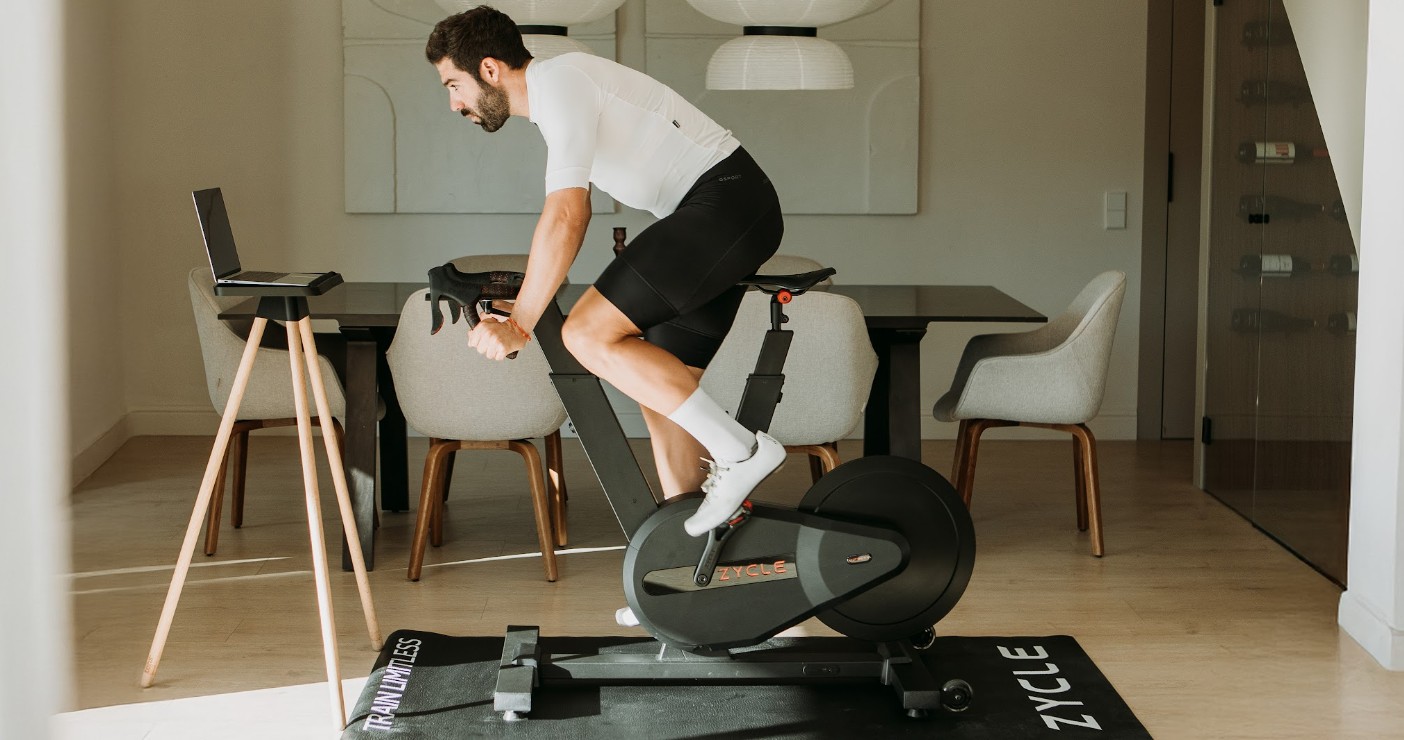
At home, you can finish without having several kilometres left to ride back. An adjustable indoor bike such as ZBike 2.0 allows you to adapt your riding position and control resistance. That ease of stopping is useful when you are still seeing how you respond. If pain makes it difficult even to get on or off the bike, the healthcare professional treating you can help you choose another more comfortable activity.
If you use your own bike, check how to set up the trainer and improve stability. A stable setup and clear space around you make it easier to stop and dismount. Keep the app controls within reach and choose a session without sudden increases in resistance. Having a workout saved does not mean you have to complete all its blocks if discomfort changes while you are pedaling.
Returning to training requires observing several sessions
After a comfortable first session, it is tempting to return to your usual training straight away. You still need to know whether that good response lasts, so progression should be agreed based on how things develop. Duration and resistance should be assessed separately: increasing them at the same time makes it harder to know what caused a worsening, if one occurs, and which change should be reversed.
A brief record of your symptoms can include minutes spent pedaling, when pain begins, and what happens afterwards when walking, sitting or sleeping. You may have got off the bike with discomfort similar to what you felt at the start, but slept worse that night. That detail helps review the plan with the person overseeing your recovery, even if you felt well during the warm-up.
If several sessions continue to leave you feeling worse, cycling can wait while you maintain another activity you tolerate better. There is no single return timeline for everyone. When you try again, with the guidance you have received, being able to walk, sit or sleep afterwards without feeling worse will be a more useful benchmark than completing the minutes set by the app.