

 Cart is empty
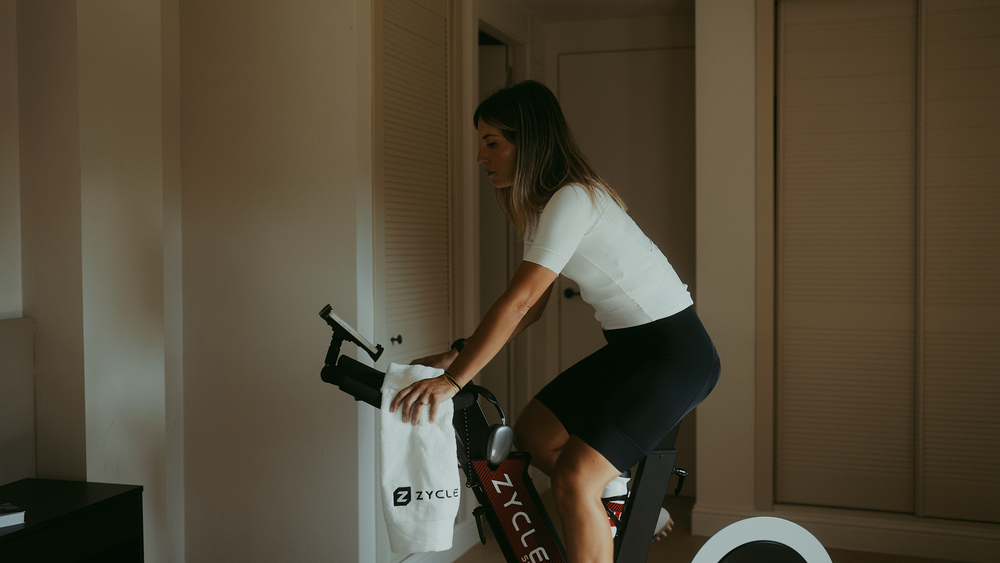
The search for stationary bike pregnancy often stems from a reasonable question: whether indoor cycling remains a suitable option as the body changes. In an uncomplicated pregnancy and with medical clearance, a stationary bike can provide low-impact aerobic activity without the risk of falling associated with riding on the road.
That does not mean there is one routine that works for everyone. Training history, trimester, symptoms, and the recommendations of the obstetric care team determine what intensity and duration are appropriate. The goal is not to maintain your previous level at all costs, but to move safely and adapt each session to how you feel each day.
When it can be a safe option
Clinical guidelines include stationary cycling among the activities that can be practiced during a healthy pregnancy. Compared with a conventional bicycle, it provides a stable base and makes it easier to stop as soon as discomfort arises. This comparison of types of stationary bikes helps identify differences in position and stability before choosing equipment.
Before starting or continuing, consult the healthcare professional overseeing your pregnancy. Some complications, such as certain heart or lung conditions, persistent bleeding, advanced placenta previa, risk of preterm birth, or preeclampsia, may make exercise inadvisable. Assessment should be individualized, even if you were a regular cyclist before pregnancy.
Realistic benefits of indoor cycling
Regular physical activity during a pregnancy without contraindications is associated with benefits for cardiorespiratory fitness, well-being, and managing healthy weight gain. A stationary bike also allows resistance to be adjusted precisely and avoids repetitive impact. It does not prevent complications on its own or replace prenatal checkups.
A comfortable posture is more important than replicating your previous athletic setup. As your center of gravity changes, it may be helpful to raise the handlebars, reduce your torso lean, and leave room for your abdomen. The indoor cycling posture tips serve as a starting point, but they should give way to any clinical recommendation or new discomfort.
How to manage intensity without chasing heart rate
Heart rate response changes during pregnancy, so a universal heart rate limit may be of little use. For a moderate session, use the talk test: you should be able to hold a conversation in complete sentences. A perceived exertion of approximately 12 to 14 out of 20 is also a better guide than competing with your previous records.
If you were already training intensely before pregnancy, do not assume you can maintain every interval. Discuss it at your prenatal appointment and assess how you feel during the warm-up. Unusual fatigue, a warm environment, or a poor night’s sleep are valid reasons to shorten your workout. Progress is measured by tolerable consistency, not by watts or calories.
Start with ten easy minutes and gradually increase to sessions of twenty or thirty minutes if your response is good. On lower-energy days, short blocks separated by breaks may be enough. Maintain a comfortable cadence and avoid resistance levels that force you to rock your pelvis or hold your breath.
Practical adjustments for comfortable pedaling
Position the saddle so your knee maintains a slight bend at the lowest point of the pedal stroke. Bring the handlebars closer and raise them if you need to relieve pressure on your back, neck, or hands. Make sure you can get on and off steadily, keep a bottle within reach, and use ventilation to limit excessive heat.
A heart rate monitor can record the session, but it should not become a medical traffic light. This guide on heart rate monitors in indoor cycling explains its sporting function. During pregnancy, interpret the reading alongside conversation, perceived exertion, and guidance from your healthcare professional. Also note the room temperature and whether you had eaten or rested normally, as that context helps explain why two similar sessions may feel different.
Signs to stop the session
Stop exercising and seek guidance if you experience vaginal bleeding, fluid leakage, dizziness, fainting, chest pain, shortness of breath before exertion, pain or swelling in one calf, weakness affecting balance, painful regular contractions, or a severe headache. Do not try to complete the planned time to see whether the symptom goes away.
It is also advisable to stop if you experience pelvic or abdominal pain, blurred vision, palpitations accompanied by discomfort, or a sensation that is clearly different from usual fatigue. In an emergency, follow the healthcare guidance in your area. An app or a bike cannot assess these symptoms.
A routine adaptable by trimester
There is no need to assign a rigid figure to each trimester. In the first, nausea and fatigue may have a greater impact. Later, abdominal size and balance usually call for a more upright position. Adjust the session every week and accept that the duration may decrease. The absence of discomfort one day does not guarantee that the same workout will be suitable the next. Keep the floor clear and ask for help getting on if you notice your balance has changed.
A simple structure consists of five or ten minutes of warm-up, ten or twenty minutes at a conversational pace, and five very easy minutes to finish. If you are looking for a stable and adjustable position, the ZBike 2.0 indoor bike can provide a training environment, as long as the setup is comfortable and its use has been authorized. It is not a medical device and does not replace prenatal supervision.
Keep track of how you felt during the session and in the hours afterward. If you recover well, you can maintain the frequency or add a few minutes. If pain, disproportionate exhaustion, or any warning sign appears, stop and consult a professional. The best adaptation is the one that allows you to stay active without turning pregnancy into a performance test.