
 Cart is empty
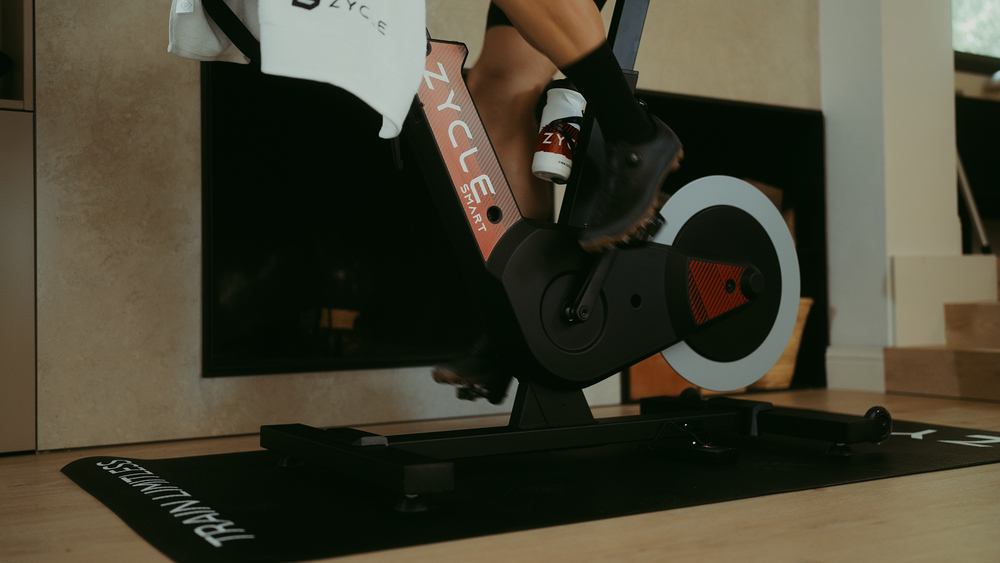
Staying active after 60 does not require chasing personal bests or training as you did twenty years ago. An exercise bike for older adults lets you manage effort, pedal without depending on traffic, and end the session when you need to. That controlled environment reduces practical barriers and makes it easier for exercise to find a stable place in your week with calm and consistency.
The key is not the age shown on your ID, but your starting point, experience, and health status. An active person may tolerate demanding sessions, while someone else may need to start with ten gentle minutes. The initial goal is to build regularity and confidence, without using extreme fatigue as a measure of quality.
Why indoor cycling fits well after 60
Cycling is a cyclical activity in which you can regulate resistance and cadence without dealing with the unexpected changes of an outdoor route. At home there are no intersections, uneven surfaces, or wind forcing you to increase intensity. In addition, you can keep water, ventilation, and support nearby, which is useful when you are rebuilding the habit or prefer a controlled environment.
That does not make the bike a complete exercise on its own, but it is an accessible way to accumulate aerobic work. If you want to better understand the basis of this modality, the guide on features and benefits of indoor cycling explains how a session is organized and what role resistance and cadence play.
How to start with an intensity you can sustain
General recommendations for older adults include moderate aerobic activity during the week, along with strength and balance. You do not need to reach that volume from day one. If you have not trained for a while, try 10 or 15 minutes at a comfortable pace, two or three times per week, and increase duration first before making the resistance harder.
The talk test is a simple reference. At a moderate intensity, you breathe more vigorously, but you can still hold a short conversation. You can also use a perceived exertion of three or four out of ten. If you take medication that changes your pulse, avoid copying someone else’s heart rate zones and prioritize the advice of your healthcare professional.
Adjustments matter more than the saddle number
Before pedaling, set the saddle at a height that allows you to extend your leg without locking the knee, and position the handlebars where you can rest your arms without hunching your shoulders. Start with a stable and comfortable position. A small change can greatly improve how it feels, but persistent pain is not corrected simply by raising or lowering the saddle at random.
If you choose a bike to share or to progress using data, make sure its adjustments are clear and repeatable. An intelligent indoor bike with adjustable position allows you to control the load in a stable environment. Even so, no model replaces a professional assessment when there are joint, cardiac, or neurological limitations.
Which data to look at without turning them into a test
At first, four references are enough: time, comfortable cadence, perceived exertion, and subsequent response. Watts can help you repeat a load, but they are not a grade. If today you complete twenty minutes with control and tomorrow you need to lower the resistance, that adjustment is also part of training with good judgment.
Recovery provides information. You should finish feeling that you have worked and, at the same time, be able to continue with your day. The guide to first steps with an indoor bike helps organize the equipment and the session without adding unnecessary metrics. If dizziness, chest pain, or disproportionate shortness of breath appears, stop exercising and seek medical assessment.
Also observe what happens during the following hours. Mild fatigue may be normal when returning to activity, but the session should not leave you without energy for your usual tasks. If recovery worsens for several days in a row, reduce time or resistance. That accumulated response is more useful than trying to beat your previous record every time you get on the bike.
The bike needs strength and balance as companions
Cycling mainly works the cardiorespiratory system and the muscles of the legs, but daily life also requires getting up, carrying objects, stabilizing yourself, and reacting to a stumble. That is why recommendations for older adults combine aerobic exercise with strength at least two days per week and specific balance activities adapted to each person.
There is no need to organize a complicated program. Sitting down and standing up from a chair with control, working with bands, or doing support exercises can complement the bike. These exercises for cyclists off the bike offer ideas that should be adjusted to your mobility, experience, and safety.
A simple routine to build consistency at home
An initial session can include five very gentle minutes, ten or fifteen minutes of steady pedaling, and another five minutes to slow down. Maintain a comfortable cadence, avoid grinding with too much resistance, and use a fan if the room gets warm. When that structure feels easy for several sessions, add five minutes or a small, slightly livelier block.
Leave at least one easy day between the first sessions and note how your legs, sleep, and energy respond. Progression does not have to be linear. There will be weeks to add time and others to maintain it. What matters is that each increase is small enough to preserve technique and allow you to get back on the bike without fear a few days later.
An exercise bike for older adults works best when it becomes an everyday tool, not a test of willpower. Adapt the plan to your abilities, combine pedaling with strength and balance, and ask for guidance if you have a chronic illness or new symptoms. This way, training at home can give you continuity and autonomy without forcing you to compete with anyone.