
 Your cart is empty.

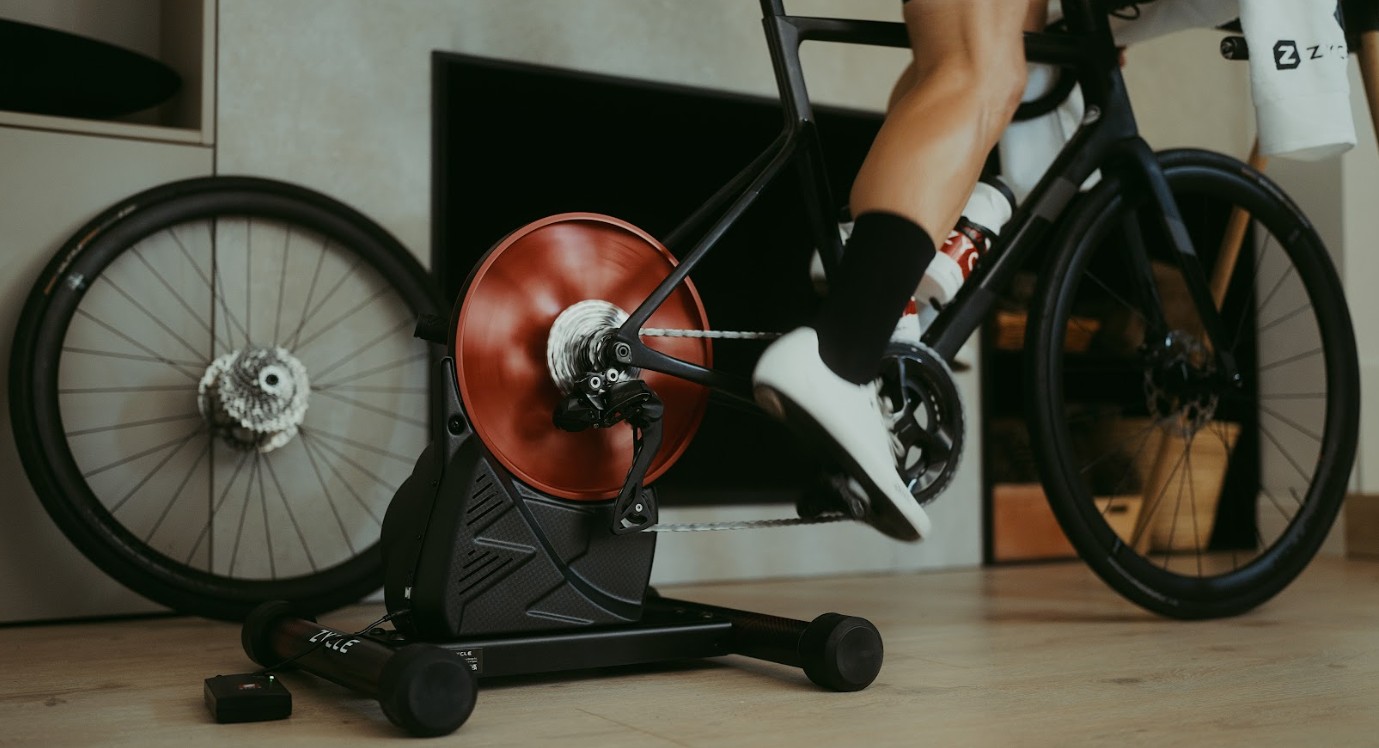
When training indoor cycling, it’s common to focus on power, session duration, or heart rate. However, there’s another variable that directly affects pedaling efficiency and muscle fatigue: the ideal cadence on the trainer. Understanding how it works and how to train it helps improve pedaling technique and get more out of every session.
Cadence refers to the number of revolutions the crank arms make in one minute. Although it may seem like a simple figure, it has a major influence on how the effort is distributed between the leg muscles and the cardiovascular system. Maintaining an appropriate cadence can make pedaling smoother and more efficient, especially during longer sessions.
Indoors, it’s easier to work on this variable because conditions are constant. There’s no wind, changes in terrain, or external interruptions. This makes the trainer or smartbike an ideal environment to learn how to control pedaling rhythm and improve coordination.
What cadence is in cycling and why it’s important
Cadence measures the speed at which the bike’s crank arms turn and is expressed in revolutions per minute, or rpm. Although it may look like just another technical metric, it actually has a very direct impact on how the body produces energy while pedaling.
A low cadence means applying more force with each pedal stroke. This can create a greater muscular load on the quadriceps and glutes, which in the long run can increase fatigue. By contrast, a very high cadence reduces the force applied with each pedal stroke but increases cardiovascular work.
Finding a balance between force and pedaling speed is what makes it possible to sustain an efficient effort for longer. That’s why working on cadence is an important part of any cyclist’s training, both outdoors and indoors.
What is the ideal cadence on the trainer
There isn’t a single universal number that defines the ideal cadence on the trainer. Each cyclist has different biomechanics, different experience, and their own physical capabilities. Still, in most endurance workouts cadence typically falls between 80 and 95 rpm.
Within that range, pedaling tends to feel smoother and more efficient. In addition, muscular load is distributed better and the risk of early leg fatigue is reduced. Many cyclists find a comfortable rhythm in that interval for long sessions or base training.
In intensity work or short intervals, it’s common to increase cadence slightly. These exercises help improve neuromuscular coordination and develop greater pedaling agility.
How to train cadence in indoor cycling
Indoor cycling allows you to work on cadence with great precision. By removing external variables such as wind or traffic, the cyclist can focus solely on pedaling technique.
An effective way to train cadence is to do specific intervals. For example, you can program five-minute blocks holding a steady cadence of 85 or 90 rpm, followed by recovery periods. This type of workout helps internalize a consistent pedaling rhythm.
Another strategy is to do progressive cadence drills. In this case, the cyclist starts with a moderate cadence and gradually increases it each minute while keeping the same effort intensity.
To make these exercises more effective, it’s also worth paying attention to the training environment. A stable, well-prepared space helps you concentrate better on pedaling technique. Factors such as the support surface or vibration absorption influence training comfort. In fact, optimizing your space to reduce noise and vibrations in your indoor cycling area can make it easier for sessions to run with greater stability.
Which metrics to monitor besides cadence
Although cadence is a key metric, it shouldn’t be analyzed in isolation. To correctly understand performance during an indoor session, it’s important to look at other data that helps interpret the effort.
Power is probably the most direct indicator of the work the cyclist is doing. Two people can maintain the same cadence but produce very different power levels. Analyzing both metrics together makes it easier to understand how the effort is being produced.
Heart rate also provides relevant information. Comparing cadence with the heart’s response helps identify which pedaling rhythms are most efficient for each cyclist. In some cases, a slightly higher cadence can reduce muscular load and improve cardiovascular response.
This type of analysis is especially useful when training with indoor cycling trainers that can record different metrics in real time. Combining data makes it possible to fine-tune training more precisely.
Common mistakes when working on cadence
One of the most common mistakes is trying to hold very high cadences for the entire session. While working at high cadences can be useful in certain drills, it isn’t always the most efficient option for every workout.
Another frequent mistake is focusing only on pedaling speed without paying attention to technique. A high cadence makes no sense if the pedal stroke is uneven or if the cyclist loses stability on the bike.
It’s also common to forget that cadence should be adapted to the type of session. In strength workouts it can be useful to work with lower cadences, while in aerobic endurance sessions you typically aim for a smoother, steadier pedal stroke.
How to integrate cadence work into your indoor set-up
Working on the ideal cadence on the trainer doesn’t depend only on the numbers on the screen. The environment where you train also influences session quality and the cyclist’s ability to concentrate.
Creating a comfortable, well-organized space helps you stay consistent and get more out of every workout. Factors such as ventilation, lighting, or equipment placement can make an important difference.
That’s why, in addition to choosing the right trainer or bike, it’s also worth thinking about where to place a stationary bike at home to create a practical and pleasant training corner.
When the environment is well prepared and metrics are used intelligently, cadence becomes a very useful tool for improving pedaling efficiency. Over time, learning to control this aspect of training helps you pedal more smoothly, manage effort better, and make steady progress in indoor cycling.