
 Cart is empty
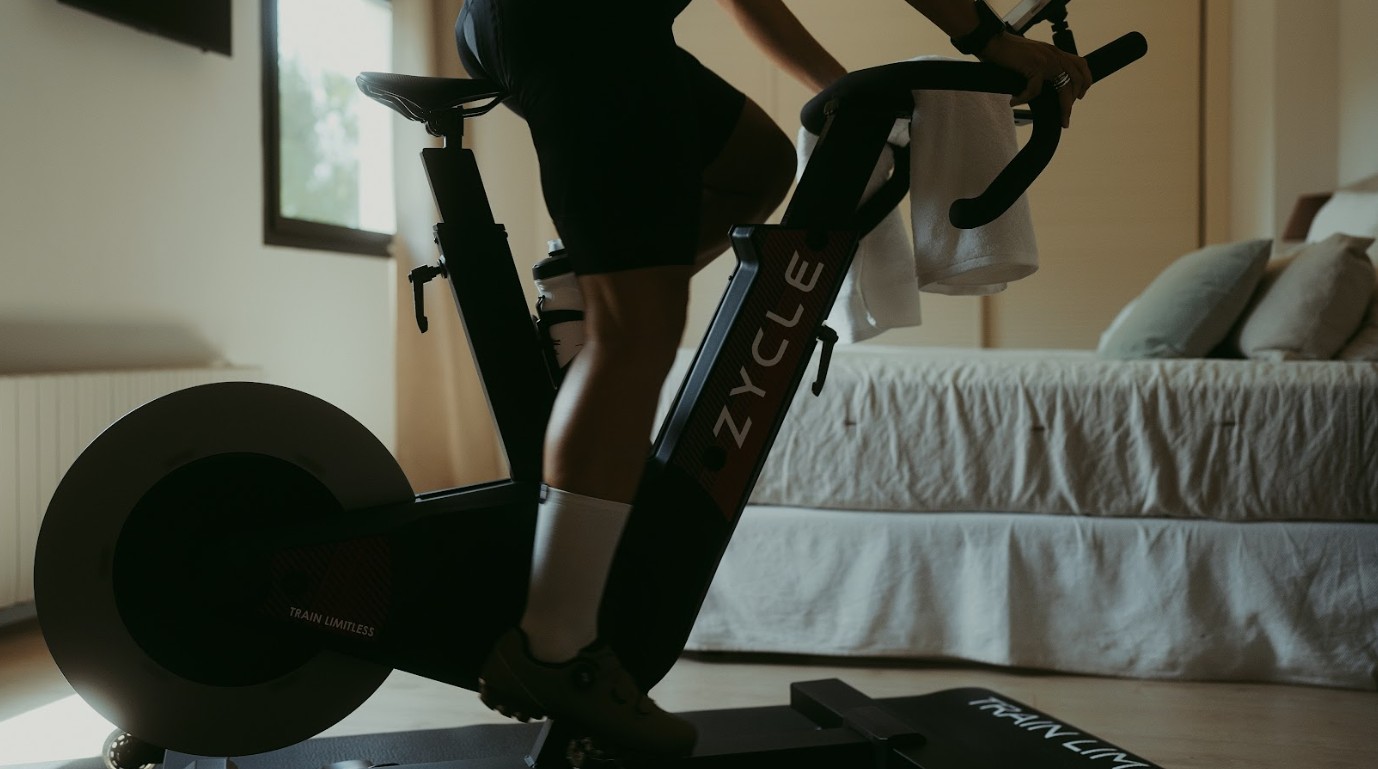
Muscle soreness is one of the most common discomforts after an intense indoor cycling session, a return to the trainer after a break, or a first class with the cadence cranked up. It’s not dangerous, but it does limit performance in the following days and, if it keeps happening, it can undermine your consistency. The good news is that you can greatly reduce it with simple decisions on and off the bike.
In this guide you’ll see how to avoid soreness by applying specific measures before, during, and after each session. We cover warm-up, load management, cool-down, nutrition, and strategies to speed up recovery if you’re already dealing with it. The goal is for you to be able to ride more days in a row without carrying unnecessary discomfort.
What soreness is and why it appears after cycling
Muscle soreness, technically known as DOMS (Delayed Onset Muscle Soreness), appears between 24 and 48 hours after an effort the muscle wasn’t used to. It is usually due to micro-damage caused by eccentric contractions and intensities higher than usual. In indoor cycling it’s typical after returning to the trainer after a break, pushing demanding cadences without preparation, or stringing together high-intensity intervals without progression.
It shows up as diffuse pain, stiffness when moving, and a slight loss of strength for two or three days. Once it sets in, there are no magic shortcuts: time, good hydration, and active recovery are the most reliable tools. That’s why the interesting part is preventing it, and for that you work before, during, and after each session with measures we’ll see right away.
Warm-up and pre-ride activation
Getting on the bike and starting hard is the most common mistake. The warm-up isn’t a formality: its purpose is to raise muscle temperature, improve joint mobility, and prepare the heart for the workload ahead. 10 minutes in an easy zone with a comfortable cadence and a few short accelerations to activate fast-twitch fibers is the standard recipe.
Along with the on-bike warm-up, a few minutes beforehand of dynamic mobility (hip circles, adductor openers, glute activation) reduces the likelihood of tightness and compensations. This step is often skipped when time is tight, and that’s precisely when soreness shows up the next day. A useful order is mobility, warm-up, session, and stretching after cycling to close the loop with good posture.
Manage intensity progression during the session
The most important rule against soreness is to increase the load gradually. The muscle responds to the stimulus, not a sudden jump. Increasing volume or intensity by more than 10–15% from one week to the next doubles the likelihood of delayed-onset muscle soreness. If you’re coming back after a break, start at 60–70% of what you used to do and build up over two or three weeks.
Within each session, take care of your pedaling technique and stay in efficient cadences. Grinding hard gears at low cadence for long stretches is the typical profile that triggers soreness, because it forces more intense contractions and more eccentric cycles. Alternating cadences and keeping a smooth, round pedal stroke reduces the specific load on each fiber.
Cool-down and post-ride stretching
Stopping abruptly doesn’t help. Spend 5 to 10 minutes in zone 1 with high cadence and low load to bring your heart rate back to normal levels progressively. This controlled downshift reduces the buildup of metabolic waste, prepares the nervous system for recovery, and leaves you feeling much better than jumping from the bike straight to the shower with no transition.
Once off the bike, about 10 minutes of gentle stretching focused on quads, hamstrings, adductors, glutes, and calves rounds out the session. It’s not about gaining extreme flexibility, but about returning the muscle to its resting length. Prioritize holding each position for 20 to 30 seconds while breathing deeply, without bouncing or yanking that could inflame tissues already stressed by the effort.
Pay attention to your breathing during these minutes: inhale through your nose and do a long exhale through your mouth. That slow breathing activates the parasympathetic system and speeds the transition into recovery. Spending two or three minutes on this wrap-up calms heart rate and better prepares the body for the night’s rest afterward.
Nutrition and hydration after training
Hydration starts before the first pedal stroke and doesn’t end when you get off the bike. In indoor cycling, sweating is high even in short sessions, and a loss of 2% of body fluid worsens recovery and increases the perception of pain the next day. Drink during the session and make up the deficit in the following hours.
In the 30–60 minutes after training, the metabolic window opens: a time when the muscle better absorbs key nutrients for repair. A combined serving of carbohydrates and protein in that window speeds up protein synthesis, replenishes glycogen, and reduces the intensity of possible soreness the next day.
Avoid alcohol and very short nights in the hours after an intense session. Both factors hinder muscle repair and are directly responsible for a good share of the soreness that seems “free.” Prioritize at least seven hours of sleep when you know you pushed the session so your body has enough margin to recover.
What to do if you already have soreness
When soreness has set in, the most useful thing is to keep your body moving at low intensity. A very easy 20–30 minute session in zone 1, with no intervals or pace changes, helps far more than complete rest. Movement promotes circulation and helps remove byproducts from muscle damage.
Combined with gentle movement, applying local heat to the most affected areas, a superficial massage, and maintaining good hydration throughout the day also works well. Avoid hard sessions until the pain drops noticeably. If you return while the discomfort is still there, you delay recovery, worsen performance, and extend the problem by two or three more days.
To get back on the trainer after a break without triggering soreness, start easy and let your body adapt. Accessible, quiet equipment like the ZPro trainer allows controlled low-intensity sessions, with automatic resistance and reliable data to dose the load. With two or three weeks of sensible progression, soreness stops being an obstacle and you get back to training normally.