
 Cart is empty

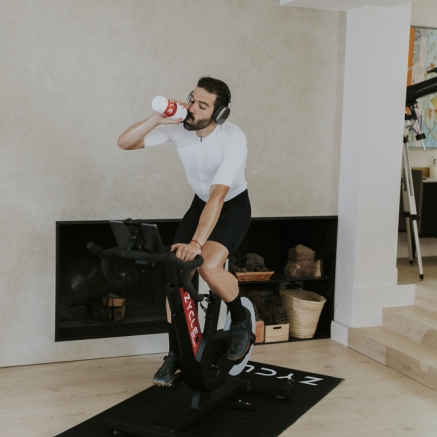
Indoor cycling allows you to train consistently all year round, but it also requires attention to details that often go unnoticed outdoors. One of the most important is sweat, as natural ventilation is limited indoors and evaporation is usually less efficient.
Preparing your training space therefore has a direct impact on both comfort and equipment maintenance. If you want to better understand how heat and air circulation influence your sessions, you can explore indoor ventilation and temperature in more depth.
When sweat is not properly managed, it ends up dripping onto the bike, the trainer, and the surrounding area. Over time, this accelerates component wear and increases the risk of noise, corrosion, and mechanical issues. This is where a bike trainer sweat protector shifts from being an accessory to becoming a preventive tool.
Why Sweat Is a Problem for Trainers and Smart Bikes
During an indoor session, the body continuously generates heat. In long or high-intensity workouts, sweat drips steadily onto sensitive areas, especially at the front of the bike, where the handlebar, stem, and headset are located.
In addition, sweat is not just water. It contains salts that promote corrosion in bolts and bearings. In smart bikes and smart trainers, moisture can also affect areas near connections and sensors. If you train using connected platforms, keeping your equipment dry helps maintain a more stable and interruption-free experience.
Areas Most Exposed to Sweat During Indoor Training

Effective management begins by identifying where sweat accumulates. This allows you to protect key components instead of relying solely on intensive cleaning.
Handlebar and Stem
Sweat from your hands and forearms falls directly onto the handlebar and seeps toward the stem. Over time, this can affect surface feel, bolts, and grip.
Positioning also plays a role. An improperly adjusted setup increases pressure on the front end and causes more sweat to accumulate in this area. To review this in detail, consult a guide on proper posture on an indoor bike.
Top Tube and Headset
Sweat that drips from the face and torso usually lands on the top tube and, due to gravity, near the headset. If it reaches the bearings, it can cause noise and reduced smoothness.
At home, even minor deterioration is more noticeable. That is why prevention is essential, while also maintaining the overall setup to avoid discomfort during training—something closely related to environmental control, as discussed in guides on reducing noise and vibrations in your indoor cycling area.
Trainer, Frame, and Floor Area
Sweat does not stay on the bike alone. It splashes onto the trainer, drips onto the floor, and accumulates at the base, especially during intense sessions or when no protective mat is used.
With smart trainers and smart bikes, keeping the structure dry helps extend the lifespan of screws, casings, and areas near sensitive components. The goal is to reduce moisture buildup, not just clean it once it is already present.
What Is a Bike Trainer Sweat Protector and Why Is It Important?
A bike trainer sweat protector is an accessory designed to absorb sweat and prevent it from coming into direct contact with the most sensitive parts of the bike during indoor training. Its function is to create an effective barrier at the front area, where sweat typically drips the most.
Unlike an improvised towel, a dedicated protector stays securely in place and provides consistent coverage. This is especially important during long sessions, when sweat increases and is more likely to reach bolts or bearings.
If you train several times per week, this type of protection reduces progressive wear. It is not just about keeping your equipment looking better, but about preventing minor damage that can turn into real problems over time.
How to Choose a Good Sweat Protector
To be effective, it must meet simple requirements. The fabric should be absorbent and relatively quick-drying to prevent moisture buildup. The fit must be secure, without shifting while pedaling, and the coverage should include the handlebar, stem, and headset area.
It should also be easy to wash. If cleaning is complicated, you are less likely to use it consistently—precisely when you need it most.
Additional Tools for Effective Sweat Management
The protector is the foundation, but it works best when supported by the right environment. A properly positioned fan improves sweat evaporation and reduces direct dripping, protecting the equipment and enhancing comfort. This is especially useful during intense workouts, when perspiration can increase significantly.
Technical clothing helps channel moisture and reduce dripping. A protective mat shields the floor and limits sweat accumulation in the support area, which is often prone to persistent moisture.
Integrating Sweat Protection into Your Indoor Routine
For prevention to be effective, it must become a habit. Placing the protector before starting prevents sweat from accumulating in critical areas from the very first minute.
After finishing your session, dedicate a few minutes to a simple routine. Remove the protector, let it dry, and wipe down the handlebar, stem, and top tube. This brief cleaning reduces salt buildup and prevents moisture from lingering on the material.
If you regularly perform structured sessions, your warm-up also plays a role, as it allows you to raise body temperature progressively and better control the onset of sweating. For practical guidance, review recommendations on how to use a trainer for an effective warm-up.
Train Better by Taking Care of Your Equipment
Sweat is inevitable in indoor cycling. The difference lies in whether you allow it to affect your equipment or manage it through prevention and a simple routine.
A bike trainer sweat protector, combined with proper ventilation and quick post-workout cleaning, is one of the most effective ways to protect your trainer or smart bike and extend its lifespan. In the long term, taking care of your equipment also means protecting your consistency and the quality of every session.